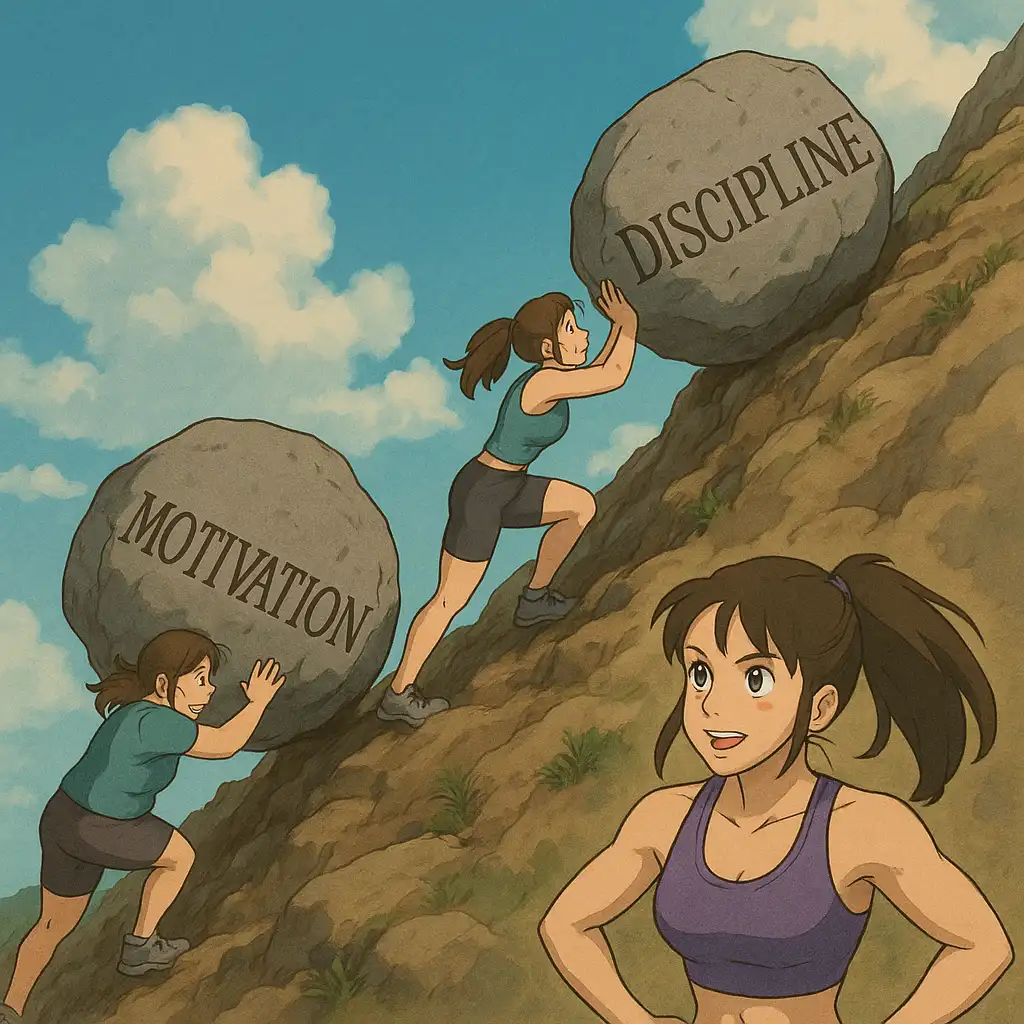
Starting the gym is the easy part. Knowing what to actually do when you get there is where most beginners get stuck — or worse, follow a random YouTube workout with no structure and quit after 3 weeks when they do not see results.
This 12-week plan is built on three principles that drive beginner results: full-body training, progressive overload, and simplicity. No complicated periodization, no 15-exercise supersets. Just a clear, effective path from week 1 to week 12.
Quick answer
A good 12-week beginner gym plan is built on full-body training 3x/week, progressive overload (adding weight or reps each week), and a small number of compound exercises done consistently — not a complicated split or constantly changing routine. Beginners can realistically expect 5-15 lbs of muscle gain and visible strength increases across all major lifts in that window.
Before You Start: Setting Expectations
What you can realistically expect from 12 weeks of consistent training and proper nutrition:
- Beginners (never trained seriously): 5–15 lbs of muscle gain, significant strength increases on all major lifts, visible body composition changes
- Scale weight: May not change much if you are eating at maintenance — you can lose fat and gain muscle simultaneously as a beginner
- Strength: Most beginners double their initial lifts within 12 weeks (starting with 45-lb squat → working toward 90+ lbs)
The key variables: showing up consistently (3 days per week minimum), eating enough protein (0.7–1 g per pound of bodyweight), and adding weight progressively.
The Program Structure
This is a 3-day full-body program. Full-body training is optimal for beginners because it trains each muscle group 3x per week, maximizing the frequency of the muscle-building signal without requiring 5+ gym days.
Training days: Monday, Wednesday, Friday (or any 3 non-consecutive days)
Rest days: Tuesday, Thursday, Saturday, Sunday
Phase 1: Weeks 1–4 — Foundation
Focus: Learn movement patterns, build consistency, establish baseline.
Every session (A and B alternate):
Session A
- Barbell Back Squat (or Goblet Squat): 3 sets × 8 reps
- Barbell Bench Press (or Dumbbell Press): 3 sets × 8 reps
- Barbell Bent-Over Row: 3 sets × 8 reps
- Romanian Deadlift: 3 sets × 10 reps
- Plank: 3 sets × 30–45 seconds
Session B
- Deadlift: 3 sets × 5 reps
- Overhead Press: 3 sets × 8 reps
- Pull-ups or Lat Pulldown: 3 sets × 8 reps
- Walking Lunges: 3 sets × 10 reps per leg
- Ab Wheel or Hanging Leg Raise: 3 sets × 10 reps
Progressive overload rule: Add 5 lbs to lower body lifts and 2.5 lbs to upper body lifts every session. When you cannot complete all reps, repeat the same weight next session.
Rest between sets: 2–3 minutes for compound lifts, 60–90 seconds for accessories.
Phase 2: Weeks 5–8 — Building Momentum
Focus: Increase volume, strengthen the movement patterns learned in Phase 1.
Changes from Phase 1:
- Add one set to each main compound exercise (3 → 4 sets)
- Add one accessory exercise per session
- Progress weight more conservatively (only when you can complete all reps with good form)
Additional accessories to add in Phase 2
- Session A additions: Dumbbell Bicep Curls 3×12, Tricep Rope Pushdowns 3×12
- Session B additions: Face Pulls 3×15, Dumbbell Lateral Raises 3×15
Phase 3: Weeks 9–12 — Intensity Push
Focus: Push toward near-maximal effort on main lifts, test your true progress.
Changes from Phase 2:
- Take main compound sets closer to failure (1–2 reps left in the tank)
- Introduce drop sets on one isolation exercise per session (reduce weight 20% and do additional reps immediately after last working set)
- Week 11: Deload — reduce all weights by 40% and do the same program. This allows full recovery and primes you for a performance peak in week 12.
- Week 12: Test your progress — attempt new personal records on squat, bench, deadlift, and overhead press.
Nutrition Guidelines
Training without proper nutrition limits your results by 50% or more. The non-negotiables:
- Protein: 0.7–1 g per pound of bodyweight daily. This is the single most important nutritional variable for beginners.
- Calories:
- Goal is fat loss: calorie deficit of 300–500 below maintenance
- Goal is muscle gain: calorie surplus of 200–300 above maintenance
- Goal is body recomposition: eat near maintenance, prioritize protein
- Timing: Eat a protein-containing meal within 2 hours before or after training. Total daily protein matters far more than exact timing.
- Hydration: Aim for at least 0.5 oz of water per pound of bodyweight daily. Even mild dehydration reduces strength performance noticeably.
Common Beginner Mistakes to Avoid
- Going too heavy too soon: Ego lifting leads to bad form, injury, and stalled progress. Start lighter than you think you need to.
- Skipping the warm-up: 5 minutes of light cardio and 2 warm-up sets (50% and 75% of working weight) before compound lifts significantly reduces injury risk.
- Not tracking workouts: If you do not write down what you did, you cannot progressively overload. Track every session.
- Changing the program after 2 weeks: Give the plan 12 weeks. Results from strength training are not visible in 2 weeks. Consistency over the full duration is what produces transformation.
- Neglecting sleep: Muscle grows during sleep. 7–9 hours is not optional — it is as important as the training itself.
What to Do After Week 12
After completing this program, you are no longer a beginner. Your next steps:
- Move to an intermediate program (Upper/Lower split 4 days/week or Push/Pull/Legs 6 days/week)
- Increase training frequency from 3 to 4 days
- Start tracking nutrition more closely if you have not been
Frequently Asked Questions
Do I need a gym for this program?
You need access to a barbell, dumbbells, and a pull-up bar or lat pulldown machine. Most commercial gyms have all of this. The program can be adapted to dumbbells only if a barbell is not available.
Can women follow this program?
Absolutely. The same principles of progressive overload, full-body training, and adequate protein apply equally to women. Women will not "bulk up" from following this program — building significant muscle mass requires years of consistent training and a calorie surplus.
What if I miss a day?
Skip it and pick up where you left off. Do not try to make up missed sessions by doubling up — this leads to overtraining and injury. Consistency over months matters more than perfection in any given week.
How does PonteFuerteAI help with this plan?
PonteFuerteAI generates and tracks this type of progressive beginner program automatically. It logs your sets and reps, shows what you lifted last session, tells you when to increase weight, and tracks your nutrition alongside training — making it significantly easier to follow a 12-week program consistently.
Ready to transform your weight loss journey?
Download PonteFuerte AI today and join thousands who are already achieving their goals with the help of our artificial intelligence.
 ▶Google PlayFree Personal Plan