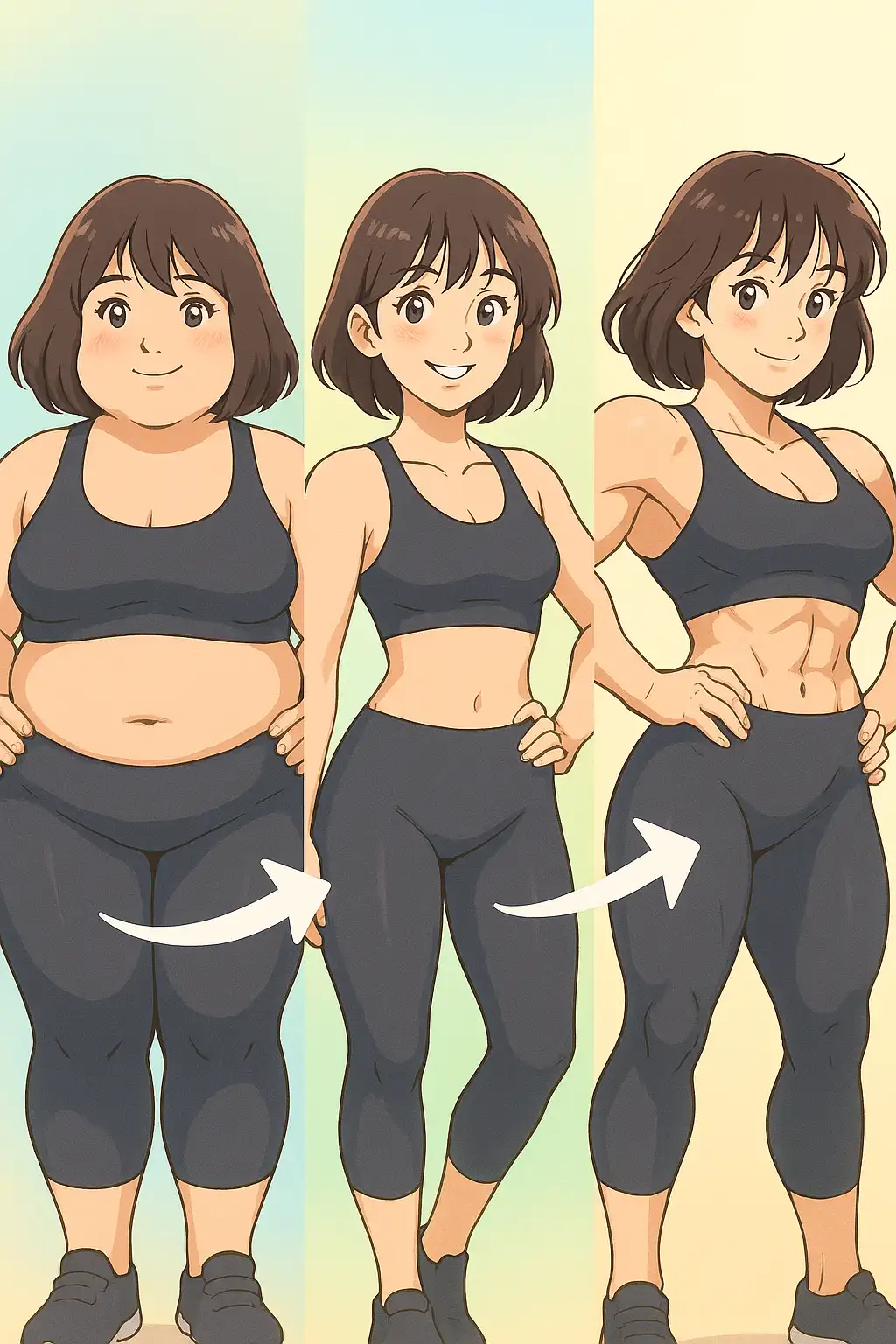
Somewhere around 40, the workout routine that used to keep you lean stops working the same way. You're eating roughly the same, moving roughly the same amount, and the scale still creeps up while your clothes fit differently. That's not a discipline problem — it's perimenopause, and most fitness apps were never built with this stage of life in mind.
That gap matters more than it sounds. The wrong app keeps nudging you toward high-intensity cardio that leaves you wired and exhausted instead of stronger. It ignores the muscle loss that's already happening quietly in the background. And it tracks the wrong things entirely — steps and calories burned, instead of protein, strength progress, and recovery. The right app does the opposite: it prioritizes strength, makes nutrition tracking something you'll actually stick with, and adapts when your energy is lower than usual.
This guide breaks down what's actually changing in your body, what an app needs to get right at this stage, and an honest comparison of five of the most commonly recommended options — including where each one genuinely falls short.
Quick answer
The best exercise app for perimenopause prioritizes strength training over cardio, tracks protein instead of just calories burned, and adapts when energy is low — not a generic HIIT-focused app built for a 25-year-old's recovery capacity. Of the five compared here, the right pick depends on whether you need pure strength programming, nutrition tracking, or both combined.
What Actually Changes in Your Body During Perimenopause
You don't need a medical degree to feel that something is different. A quick, non-clinical rundown of why training has to shift:
- Estrogen starts swinging, then dropping. This changes where your body stores fat (more around the midsection than before), how well you recover from a hard session, and often your sleep and mood too.
- Muscle loss speeds up. Everyone loses some muscle with age once they stop actively training for it, but perimenopause accelerates the decline. Less muscle means a slower metabolism — which is the real reason the same eating habits that maintained your weight for years suddenly don't.
- Bone density starts dropping. Estrogen has a protective effect on bone. As it declines, bone loss speeds up, which is exactly why weight-bearing, resistance-based exercise stops being optional at this stage.
- Recovery takes longer. Disrupted sleep — night sweats, racing thoughts, waking at 3am for no clear reason — is extremely common in this window, and poor sleep directly limits how well your body bounces back between workouts.
None of this means your best training years are behind you. It means the goal has to shift from "burn the most calories possible" to "build and protect muscle, train with intention, and actually recover."
What a Good App Needs to Get Right at This Stage
Search "perimenopause workout app" and you'll mostly find generic fitness apps with a menopause landing page slapped on top. Very few were genuinely redesigned around this stage of life. Here's what separates a useful one from a relabeled one:
- Strength training front and center, not an afterthought. If the default recommendation is still five days of high-intensity cardio, bone density and muscle retention weren't part of the design brief.
- Progressive overload that actually progresses. A program that never adjusts the weight or reps isn't a program, it's a video library. You want something that remembers what you lifted last session and tells you what to do next.
- Nutrition tracking that doesn't require a food science degree. Protein needs typically go up at this stage. If logging a meal takes ten minutes of database searching, you'll quit inside two weeks — look for photo-based logging or simplified targets instead.
- Low setup friction. If brain fog, low energy, or simply being new to structured lifting is part of your reality right now, an app that hands you a blank program builder is the wrong starting point. You want to be told what to do today.
- Room to scale a session down. Not every day is a high-energy day. A good plan lets you reduce intensity without blowing up the whole week.
One honest caveat upfront: almost none of the mainstream apps below track perimenopause symptoms directly — hot flashes, mood swings, cycle irregularity. If that's a priority, you'll likely want a dedicated symptom tracker running alongside whichever training app you choose. The five compared here are built for training and nutrition, not symptom logs.
5 Best Exercise Apps for Perimenopause, Compared
| App |
Best For |
Biggest Drawback |
| Nike Training Club | Free guided strength & mobility videos | No nutrition tracking, no progression logic |
| Peloton | Motivation through live/on-demand classes | Subscription cost, no integrated nutrition |
| MyFitnessPal | Calorie & macro tracking | No workouts, no strength guidance at all |
| Fitbod | AI-generated strength workouts | No nutrition, steep learning curve for true beginners |
| PonteFuerteAI | Combined strength + nutrition in one app | No dedicated symptom tracking, smaller library than Peloton/NTC |
Nike Training Club
Free, polished, and stocked with a genuinely large library of strength, mobility, and low-impact sessions led by real trainers. It's a strong starting point if you want guided sessions without paying anything. The gap: there's no nutrition tracking at all, and the workouts don't adapt to what you did last time — you pick a session, you do it, and the app has no memory of your progress.
Peloton
Beyond the bike, the Peloton app offers strength, yoga, and low-impact cardio classes with instructors many women find genuinely motivating — several specifically cater to a 40+ audience. The catch is the subscription cost if you don't already own the equipment, and like Nike Training Club, there's no nutrition tracking and no automatic progression — you're choosing classes, not following a structured plan that builds on itself.
MyFitnessPal
Still the most recognizable name in calorie tracking, with a massive food database. If nutrition is your only gap, it does that one job well. But it does nothing for training — no workouts, no strength guidance, no concept of progressive overload. You'd need a second app for the exercise side entirely.
Fitbod
Fitbod generates strength workouts based on your available equipment and adjusts weight recommendations as you log sessions — genuinely useful progression logic. The honest downside: it assumes a baseline comfort with a gym floor full of machines and free weights. If you're newer to lifting and the idea of an entire weight room is overwhelming, the app gives you exercises but not much hand-holding on form or where to even start. It also has no nutrition tracking.
PonteFuerteAI
PonteFuerteAI's pitch for this stage of life is straightforward: strength training with automatic progressive overload, plus nutrition tracking using AI photo logging instead of manual database searches, in one app instead of two. For someone who wants fewer apps to manage and an actual plan rather than a library to pick from, that combination covers more of the list above than any single competitor. Where it's genuinely behind: it doesn't have Peloton's instructor roster or Nike's brand-name video catalog, and like every app on this list, it doesn't track perimenopause symptoms directly.
What Does Jennifer Aniston Use for Menopause?
Jennifer Aniston has talked openly in interviews about being in the thick of perimenopause, and her approach lines up closely with what's outlined above rather than anything exotic. She's spoken about shifting toward resistance and functional training — she's a longtime advocate of Pvolve, a low-impact, resistance-based method built around controlled, functional movement rather than high-impact cardio — and about prioritizing consistency, sleep, and adequate protein over extreme dieting.
The takeaway isn't "use her exact program." It's that even with unlimited resources, the advice converges on the same basics: lift or resist something regularly, sleep matters as much as the workout, and crash diets aren't part of the equation.
The 30/30/30 Rule for Perimenopause, Explained
The 30/30/30 rule went viral as a simple morning routine: eat 30 grams of protein within 30 minutes of waking, then do 30 minutes of low-intensity steady-state cardio (a walk counts) shortly after, ideally before anything high in sugar or caffeine alone hits your system.
Why it resonates specifically with women in perimenopause: blood sugar swings tend to get worse during this transition, and both a protein-forward breakfast and gentle morning movement help blunt those swings without needing intense exercise that your body may not have the recovery capacity for yet that day. It's not a magic metabolism hack — it's a low-effort way to stabilize energy and reduce cravings later in the day, and it pairs well with a strength-focused training plan rather than replacing one.
Which App Should You Actually Choose?
It depends on which gap is actually costing you the most right now:
- If nutrition is genuinely your only weak point and you already have a training plan you trust, MyFitnessPal is still fine for that one job.
- If you want guided video sessions and don't mind a separate app for nutrition, Nike Training Club (free) or Peloton (paid, more motivating) both work.
- If you already understand lifting fundamentals and just want smart progression, Fitbod is a solid, narrow tool.
- If you want one app that handles strength progression and nutrition without juggling two logins, that's the specific gap PonteFuerteAI is built to close — AI-generated strength programs that adjust as you log sessions, combined with photo-based calorie and macro tracking, instead of running two separate apps that don't talk to each other.
PonteFuerteAI is available on iOS and Android if you want to try the combined approach — you can see a preview of your plan before paying.
Frequently Asked Questions
What is the best workout for perimenopause?
Strength training 2–4 times per week, combined with regular low-impact cardio like walking, is the combination most consistently recommended at this stage. Strength training protects muscle mass and bone density, both of which decline faster once estrogen starts dropping; low-impact cardio supports heart health and recovery without adding more stress on top of a body that may already be under-recovering from disrupted sleep.
Which app tracks symptoms and workouts?
Most mainstream training apps, including every option compared above, do not track perimenopause symptoms like hot flashes, mood changes, or cycle irregularity. If symptom tracking matters to you, plan on using a dedicated symptom-tracking app alongside a training and nutrition app rather than expecting one app to do both well.
Is weight training good for perimenopause?
Yes — it's one of the most consistently recommended interventions for this life stage. Resistance training helps preserve muscle mass that would otherwise decline faster during this transition, supports bone density at a point when bone loss accelerates, and helps maintain metabolic rate, which is often the real reason weight management gets harder even when eating habits haven't changed.
What does Jennifer Aniston do for fitness?
She has spoken publicly about favoring low-impact, resistance-based training (she's closely associated with the Pvolve method) over high-impact cardio, alongside prioritizing sleep, consistency, and adequate protein rather than restrictive dieting — an approach that lines up with what's generally recommended for perimenopause.