
2026-08-19
Creatine for Women: What Reddit and the Research Actually Say
From r/Menopause to r/beginnerfitness, women ask the same questions about creatine: does it bloat you, what dose, does it work. Real threads, real answers.
Read Article
Personal trainer & software developer · Updated 2026-10-12
Written by Alberto Menéndez, certified personal trainer with 10+ years of training experience. This guide covers the practical side of eating keto. It is not medical advice: if you have diabetes, kidney disease or take medication, talk to your doctor before changing your diet.
Updated October 2026. If you searched for a keto diet plan because a doctor told you to lose weight, or you're just tired of not knowing what to eat, you're not alone - "keto diet plan" searches have spiked hard this year. This guide covers exactly what a beginner needs: what to eat, what to avoid, a simple 7-day meal plan, what the research actually says, and how to track it all without doing math by hand.
Keto means eating mostly fat and protein - meat, eggs, cheese, fish, and low-carb vegetables - while keeping carbs under roughly 20-50g of net carbs a day. Cut bread, pasta, rice, sugar, and most fruit. Expect a rough first week (the "keto flu") until your body adapts, and take electrolytes seriously from day one.
The ketogenic diet is a high-fat, moderate-protein, very-low-carbohydrate way of eating. When you cut carbs low enough, your body runs out of glucose to burn for fuel and switches to burning fat instead, producing molecules called ketones. That metabolic state is called ketosis.
A typical keto macro split looks like:
That last number is the one that actually matters day to day. Most people don't calculate percentages - they just watch their carb grams and let fat fill in the rest of their calories.
Yes, with some nuance. A 2013 meta-analysis of randomized controlled trials published in the British Journal of Nutrition compared very-low-carbohydrate ketogenic diets against low-fat diets for long-term weight loss (1). People on the ketogenic diet lost significantly more weight and saw greater improvements in some cardiovascular risk markers, like triglycerides and HDL cholesterol, than people on a low-fat diet - though the researchers noted the size of that extra advantage was modest in absolute terms.
The honest takeaway from the broader nutrition research: keto is an effective way to lose weight, but it's not magic - it works largely because cutting an entire food category (and often ultra-processed snacks with it) makes it easier to eat in a calorie deficit and stick to it. If you can maintain a deficit more consistently on keto than on any other diet, it will work for you. If you can't sustain it, it won't outperform a diet you can actually stick to.
Keto also isn't for everyone. According to a clinical review of ketogenic diet contraindications, it is not recommended for people with type 1 diabetes, kidney or liver disease, a history of pancreatitis, or those who are pregnant or breastfeeding, and anyone on diabetes or blood pressure medication should talk to a doctor before starting, since those doses often need adjusting (2). If any of that applies to you, check with a doctor before changing how you eat.
Two of the most common keto questions are about vegetables — is asparagus keto? and is cucumber keto? Both are: they're low in net carbs (total carbs minus fiber), so a normal serving fits easily into a 20-50 g daily budget.
| Vegetable (raw, 100 g) | Net carbs (approx.) |
|---|---|
| Spinach | 1.4 g |
| Asparagus | 1.8 g |
| Avocado | 1.8 g |
| Zucchini | 2.1 g |
| Cauliflower | 3.0 g |
| Cucumber | 3.1 g |
| Broccoli | 4.0 g |
Values are approximate, based on USDA FoodData Central raw values; they vary slightly by variety and preparation.
You don't need a complicated plan to start. Here's a realistic week built from the meals people who actually stick to keto tend to repeat, because simplicity is what makes a diet sustainable:
| Day | Breakfast | Lunch | Dinner |
|---|---|---|---|
| Mon | Eggs, bacon, avocado | Chicken thighs, spinach salad, olive oil | Ground beef, cheese, lettuce wraps |
| Tue | Full-fat Greek yogurt with nuts | Tuna salad, cucumber | Salmon, roasted broccoli, butter |
| Wed | Egg and cheese quiche | Leftover quiche, side salad | Pork chops, cauliflower mash |
| Thu | Eggs, sausage | Chicken caesar salad (no croutons) | Steak, sauteed green beans |
| Fri | Omelet with peppers and cheese | Shrimp stir-fry with zucchini noodles | Ground turkey taco bowl, keto wrap |
| Sat | Bacon and eggs | Grilled chicken, avocado, salad | Baked salmon, asparagus |
| Sun | Cheese and egg scramble | Leftovers | Roast chicken, green vegetables |
A lot of people who stick with keto long-term settle into two meals a day instead of three - it's not a rule, just a pattern that tends to emerge once your appetite adjusts and you stop needing to snack constantly.
The single most common reason people quit keto in the first week isn't willpower - it's the "keto flu": headaches, fatigue, muscle cramps, and irritability that show up two to seven days in. According to the Cleveland Clinic, this happens because cutting carbs lowers insulin, which causes your kidneys to flush out more sodium, potassium, and water than usual (3). It's a hydration and electrolyte problem, not a sign that keto is failing.
The fix is simple and works for almost everyone: salt your food more than usual, drink enough water, and consider a sugar-free electrolyte supplement, especially in the first two weeks. Most people who push through this stage report it clears up within a week to ten days.
The hardest part of keto for most beginners isn't knowing the food list - it's knowing whether what they ate today actually kept them under their carb limit. Guessing carb grams from memory is where most people quietly fall off the diet without realizing it.
In PonteFuerteAI, Low carb is one of the diet preferences you can select when you set up your profile, described in the app as a keto or low-carb approach. Choosing it tells the app to weight your daily macro targets toward very low carbohydrates and higher fat, while still protecting a solid protein target so you don't lose muscle while you're in a deficit.
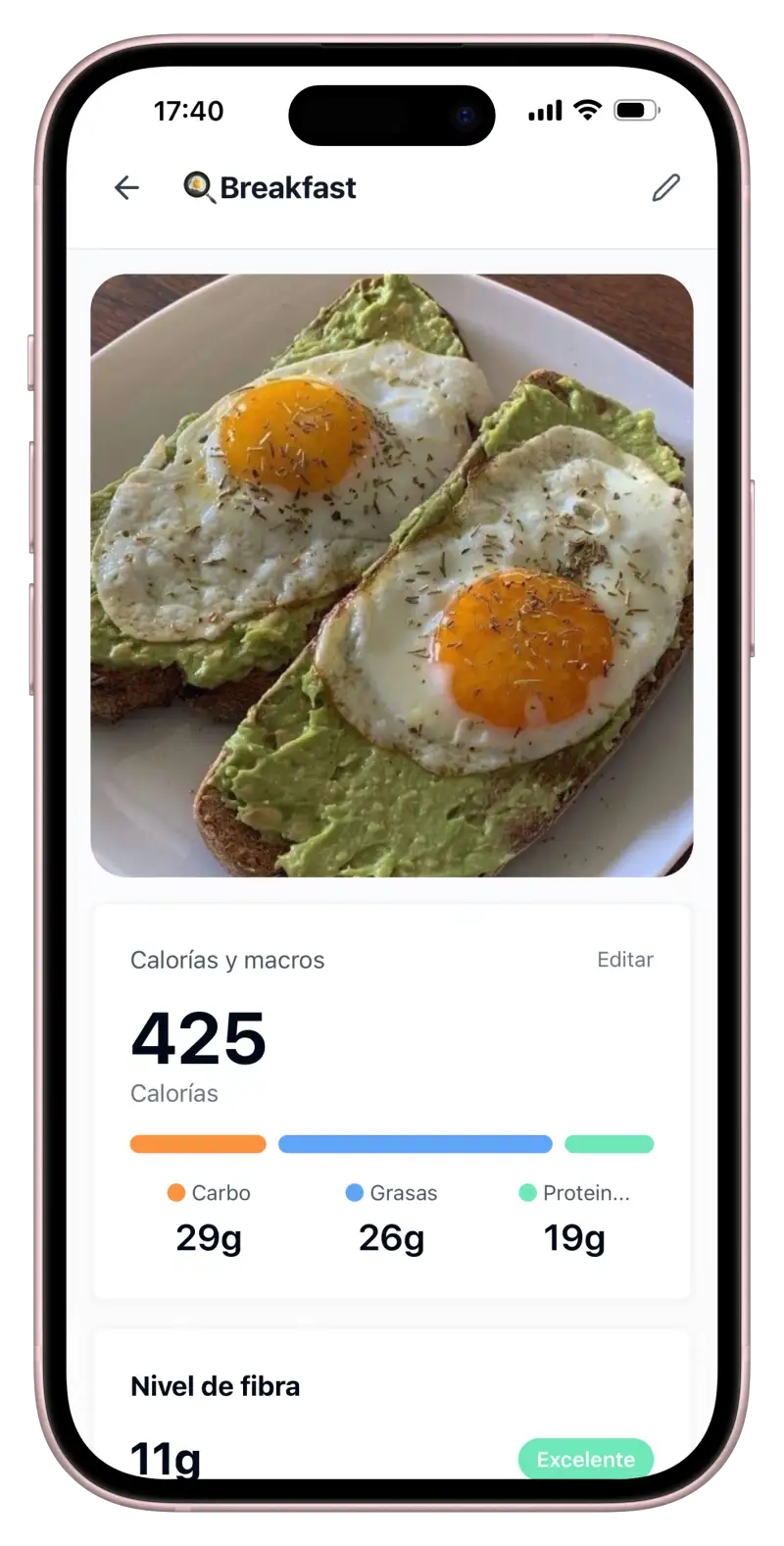
From there, instead of manually searching a food database for every meal, you take a photo of your plate and the AI logs the calories, carbs, protein, and fat for you. That's the difference between a keto meal plan you follow for three days and one you actually stick to for three months - you always know your carb count without doing the math yourself.
Download PonteFuerteAI on iOS or get it on Google Play and set your diet preference to Low carb to try it.
Most keto plans target 20-50g of net carbs per day (total carbs minus fiber). Beginners usually start closer to 20g to reach ketosis faster, then some people expand toward 50g once they're established.
Keto flu is a cluster of symptoms - headache, fatigue, irritability, muscle cramps - caused by rapid sodium and water loss in the first days of carb restriction. It typically resolves within a week to ten days, faster if you increase salt, water, and electrolytes right away.
This depends heavily on the type of diabetes and any medication involved, so it's a conversation to have with a doctor first, not a decision to make alone - some diabetes medications need dose adjustments when carb intake drops sharply, and keto is generally not recommended for type 1 diabetes without close medical supervision.
Yes. Asparagus has roughly 1.8 g of net carbs per 100 g, so a normal side serving fits easily into a keto diet.
Yes. Cucumber has roughly 3 g of net carbs per 100 g and is mostly water, making it one of the easiest keto-friendly vegetables to snack on.
Either works. A meal plan removes decision fatigue in the first couple of weeks, which is when most people quit. Once you're used to it, most people relax into repeating a handful of go-to meals rather than following a plan exactly.
Yes - that's exactly what an app like PonteFuerteAI is for. Set your diet preference to Low carb, and the app calculates your daily carb, protein, and fat targets for you, then logs your meals from a photo instead of a manual food search.
A keto diet plan comes down to a short list of foods to eat, a shorter list to avoid, and a first week where electrolytes matter more than willpower. The research backs it up as an effective way to lose weight, provided you can stick to it - and it's not the right choice for everyone, so check with a doctor if you have a condition mentioned above.
If tracking carbs by hand is the part that usually makes you quit, that's the one piece PonteFuerteAI is built to remove: set your preference to Low carb, log meals with a photo, and let the app handle the math.
Written by
Alberto MenéndezPersonal trainer · Software developer · Founder of PonteFuerteAI
Over 10 years of training experience across three continents. Certified personal trainer who coached clients in Spain, India, and Japan before building PonteFuerteAI — the all-in-one AI fitness app he always wished existed.
Read full story →Download PonteFuerte AI today and join thousands who are already achieving their goals with the help of our artificial intelligence.
 ▶Google PlayFree Personal Plan
From r/Menopause to r/beginnerfitness, women ask the same questions about creatine: does it bloat you, what dose, does it work. Real threads, real answers.
Read Article
Ladder gives you a coach's weekly team program; Fitbod generates workouts from your history and equipment. Price, platforms and who each one suits.
Read Article![Best Apps to Track Calories for Muscle Gain in 2025 [Full Guide]](/comparestrong.webp)
Most people think muscle gain comes only from lifting heavier weights—but after 15 years in the gym, I learned the hard way that training alone isn’t enough
Read Article