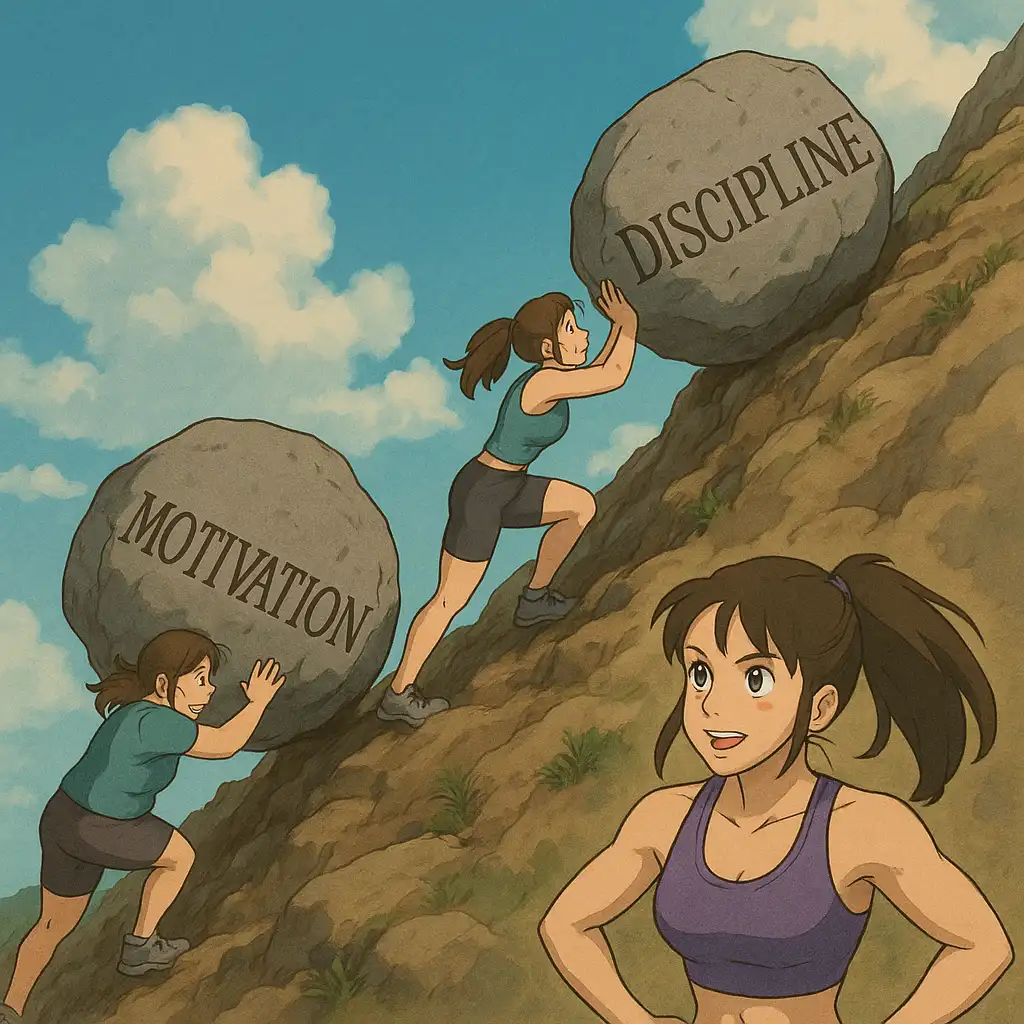
Updated July 2026. You've probably tried this before. You start strong, change your diet and your workout schedule all at once, feel great for two weeks, then life gets in the way one week and you never quite get back to it. That's not a willpower problem. It's a pattern, and it happens to almost everyone who tries to get fit the way most advice tells you to.
The short version
Most people quit right before it gets easier - real habits take a median of about 66 days to feel automatic, not the "3 weeks" people expect. Diet does most of the work on the scale; exercise keeps the muscle and makes it last. Start smaller than feels necessary, track what you actually eat and weigh, and stop judging progress day to day.
The Real Reason You Can't Get Fit (It's Not Motivation)
You've heard that it takes about three weeks to build a habit. That number is a myth. The real research on habit formation - a study that tracked 96 people trying to build a daily habit over 12 weeks - found it took a median of 66 days for a behavior to start feeling automatic, with a range of 18 to 254 days depending on the person and the habit (1).
That single fact explains most failed attempts at getting fit. People expect it to feel easy after two or three weeks. When it still feels like a chore in week three - because for most people it still does - they read that as proof it isn't working, and they quit right before it was about to get easier. You're not failing at fitness. You're quitting on a schedule that was never realistic in the first place.
You're also not alone in struggling with this by default: according to CDC survey data, fewer than one in four US adults actually meet the government's basic weekly guidelines for both aerobic and strength activity (2). The starting line is genuinely difficult for almost everyone - it's just rarely framed that way.
Why Diet Matters More Than Your Workout
If the goal is to lose weight, exercise is not the main lever - diet is. Burning off a fast-food meal on a treadmill takes far longer than most people expect, and it's a lot easier to not eat 500 extra calories than to burn them off afterward. A calorie deficit is what actually drives weight loss; working out mainly determines how much of what you lose is fat versus muscle, plus it does the heavy lifting for your long-term health and metabolism.
In practice, that means: if you can only fix one thing this month, fix what you eat before you fix your workout plan. Track everything you eat for two weeks without changing anything yet. Most people are surprised by where their calories are actually coming from - sauces, drinks, and weekend eating usually account for more than the meals people think are the problem.
The "Walking In the Door" Trick That Actually Works
One of the most effective, least talked-about tricks for building a workout habit has nothing to do with the workout itself: on days you don't want to go, go anyway, do the easiest possible version of the session, and give yourself permission to leave early if you're still not feeling it. Most of the time you won't leave. The habit you're actually building in the first month isn't "working out hard" - it's "showing up," and showing up is the part that compounds.
This matters more than picking the "optimal" program. A mediocre plan you actually do beats a perfect plan you abandon in week two.
Start Smaller Than You Think You Need To
The version of "get fit" that fails is the one where you overhaul your diet, start a 5-day workout split, cut out alcohol, and fix your sleep, all starting Monday. That's five habits stacked on top of each other, and habit research says even one takes months to feel automatic.
The version that works is boring: pick one simple full-body workout you can repeat three times a week, or a daily step goal, and just do that consistently for a month before adding anything else. Once that feels close to automatic, add the next piece. It feels slower. It isn't - it's the version that's actually still running six months later.
Track the Right Things (and Ignore the Wrong Ones)
Two tracking habits separate people who stay consistent from people who quit over a bad week:
- Track your weight trend, not each day's number. Your weight can swing 2-4 lbs day to day from water and sodium alone. Weigh in regularly and look at the weekly average, not the daily reading, or a single "bad" morning will convince you nothing is working when it actually is.
- Log your food instead of estimating it. Guessing portion sizes is the single most common reason people plateau without knowing why. An app that logs calories, protein, and carbs for you removes the guesswork that usually kills consistency before results show up.
Progress photos and strength numbers going up are also worth tracking - the scale is noisy, but visible momentum from either of those is a much better motivator than willpower.
How PonteFuerteAI Fits Into This
If you've never set foot in a gym and don't know where to start, the two hardest parts of "getting fit" are knowing what workout to actually do, and knowing whether what you ate today fits your goal. PonteFuerteAI is built around removing both of those decisions: it generates a workout plan for you based on your level and adjusts it as you progress, and instead of manually searching a food database, you log meals with a photo and the AI handles the calories, protein, and macros.
That matters because the theme running through everything above is the same: consistency beats intensity, and the easiest way to stay consistent is to remove as many daily decisions as possible. Less guessing, less friction, more days where you just show up.
Download PonteFuerteAI on iOS or get it on Google Play to try it.
Frequently Asked Questions
How long does it actually take to get fit?
Expect roughly 4-6 weeks before workouts stop feeling awkward, 8-12 weeks before changes are visible, and a median of about 66 days before the habit itself feels automatic rather than something you have to force, according to real-world habit research. Most people quit around week two or three, right before it gets easier.
Is diet or exercise more important to get fit?
Diet drives most of your weight loss result - a calorie deficit is the actual mechanism, and exercise alone rarely creates a large enough deficit on its own. Exercise is essential for keeping muscle, long-term health, and making the results last, but if you had to fix one thing first, fix what you eat.
What is the fastest way to get fit?
There isn't a legitimate fast way that also lasts. The approach that actually works is the boring one: a small, repeatable routine you do consistently for months, not an intense plan you can only sustain for two weeks.
Do I need a gym to get fit?
No. Walking, bodyweight training, and home workouts all work, especially in the first months. A gym gives you more equipment and progression options later, but it is not a requirement to start.
What should a complete beginner do first?
Pick one simple full-body workout you can repeat 3 times a week, and start tracking what you eat for two weeks without changing anything yet, just to see where your calories are actually coming from. Add changes one at a time instead of overhauling everything at once.
Bottom Line
Most people don't fail to get fit because they lack discipline. They fail because they expect it to feel easy sooner than it realistically does, they change everything at once, and they judge progress by a single noisy number instead of a trend. Fix the diet first, start smaller than feels necessary, track consistently, and give it the two to three months real habit formation actually takes.
If tracking food and knowing what workout to do are the parts that usually make you quit, that's exactly what PonteFuerteAI is built to remove.
Sources Checked