Personal trainer & software developer · 2026-11-02
Written by Alberto Menéndez, certified personal trainer with 10+ years of training experience. "Skinny fat" is the body type I've seen confuse people the most — because the usual advice (eat less, do more cardio) makes it worse.
You're not overweight. You look normal in clothes. But with your shirt off there's a soft belly, thin arms and no real shape — and every time you diet, you just get smaller, not fitter. That's skinny fat: a normal body weight with too little muscle and a relatively high body-fat percentage. The fix isn't losing more weight. It's building muscle while losing a bit of fat — what's called body recomposition.
Quick answer
To fix skinny fat, lift weights 3-4 times a week with progressive overload, eat around maintenance or a small deficit (about 200-300 kcal), and eat roughly 1.6 g of protein per kg of body weight. Don't crash diet or rely on cardio — that makes you smaller, not leaner. Most beginners see a clear difference in 3-6 months.
Am I Skinny Fat?
Common signs:
Normal or low weight for your height, but a soft belly or love handles.
Thin arms, shoulders and chest.
Little strength — push-ups or carrying heavy things feel hard.
Every diet leaves you "smaller but still soft."
Reddit is full of people describing exactly this. One r/workout user put it simply: "It's like the only part of my body that has fat on it is my stomach." Another in r/beginnerfitness titled their thread "Skinny fat… losing weight but just getting skinny, not fit." — the most common trap of all.
Why Dieting and Cardio Make Skinny Fat Worse
Skinny fat is mostly a muscle problem, not a fat problem. If you diet hard and do lots of cardio without lifting, you lose some fat but also muscle — so your body-fat percentage barely improves and you end up even thinner and still soft. As a long-running r/leangains guide on skinny fat puts it, people "don't like the way the fat they are carrying looks on them. This is remedied by adding muscle to their frame."
How to Fix Skinny Fat: The Recomp Plan
1. Lift weights 3-4 times a week
This is the non-negotiable. Beginners can build muscle and lose fat at the same time, which is exactly what makes recomposition work for skinny-fat people. A simple, effective setup:
Full body 3x/week or upper/lower 4x/week.
Built on compound lifts: squat, Romanian deadlift, bench or dumbbell press, rows, overhead press, pull-ups or pulldowns.
3 sets of 6-12 reps, stopping 1-2 reps before failure.
Progressive overload: add weight or reps every week. If you're not getting stronger, you're not building muscle.
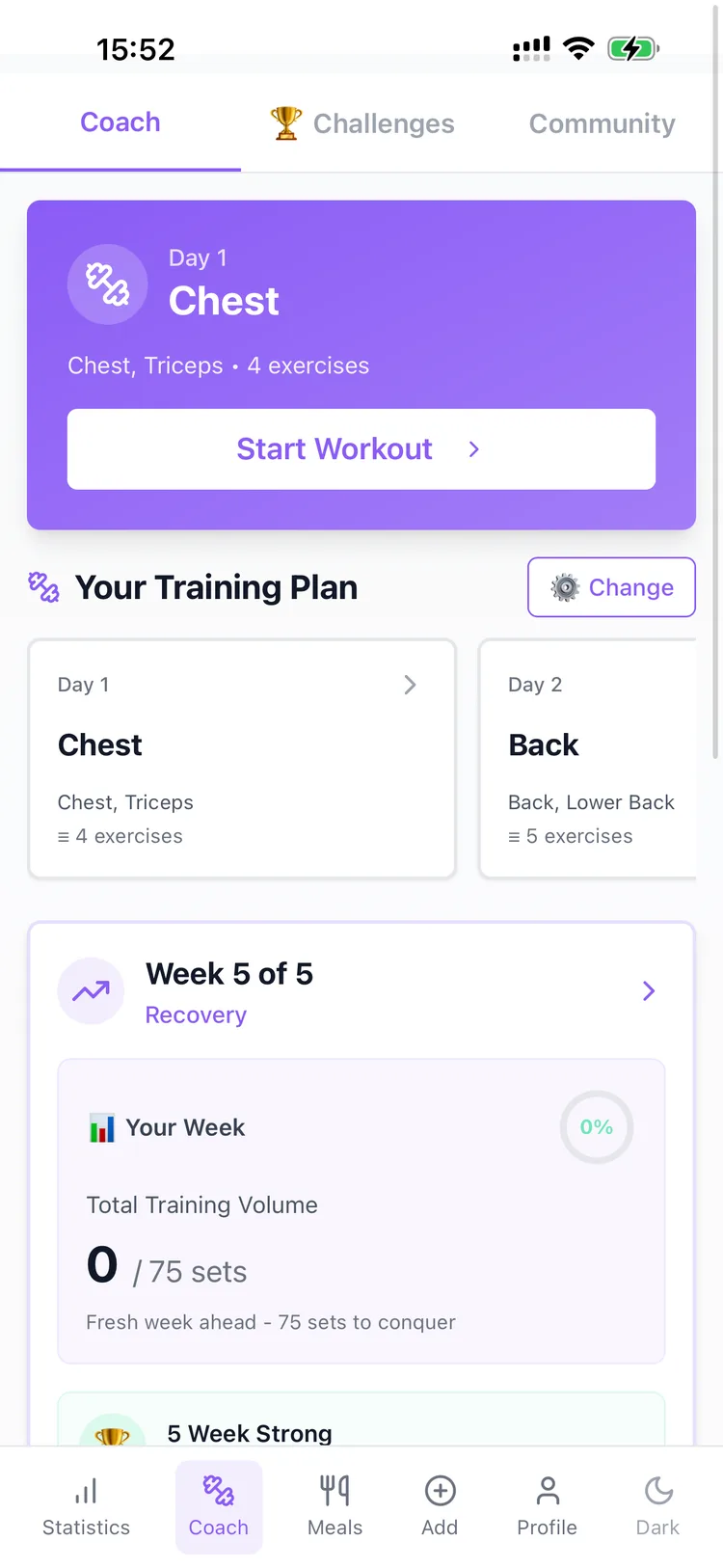
PonteFuerteAI builds your strength plan and tells you when to add weight — the key to fixing skinny fat.
2. Eat around maintenance (or a small deficit)
Not a big deficit. If you're very soft, go about 200-300 kcal below maintenance — Reddit's recommendation to "go on a slight deficit, maybe 2 to 300 under your maintenance" matches what I do with clients. If you're already quite lean but have little muscle, eat at maintenance or slightly above.
3. Hit your protein every day
Around 1.6 g of protein per kg of body weight is where research shows the biggest muscle-building benefit (Morton et al., 2018, British Journal of Sports Medicine). For a 70 kg person, that's about 110 g a day — usually more than skinny-fat people are eating.
4. Walk, don't grind cardio
Daily steps are great for health and fat loss without eating into recovery. Long, hard cardio sessions are the thing to cut back on while you're focused on building muscle.
5. Sleep 7-9 hours
Muscle is built during recovery. Poor sleep slows progress and increases hunger.
How Long Does It Take to Fix Skinny Fat?
For beginners who train consistently and eat enough protein, 3 months usually brings a visible change in the mirror, and 6-12 months a completely different physique. The scale may barely move — that's normal in a recomp, because you're losing fat and gaining muscle at the same time. Track waist measurement, progress photos and strength instead.
Where PonteFuerteAI Fits
Skinny fat is fixed by doing three things at once — lifting with progression, eating the right calories, and hitting protein — and most people drop one of them. PonteFuerteAI keeps all three in one place:
A personalized strength plan for your level and equipment, with progression built in.
Calorie and protein targets for recomposition, not a generic weight-loss number.
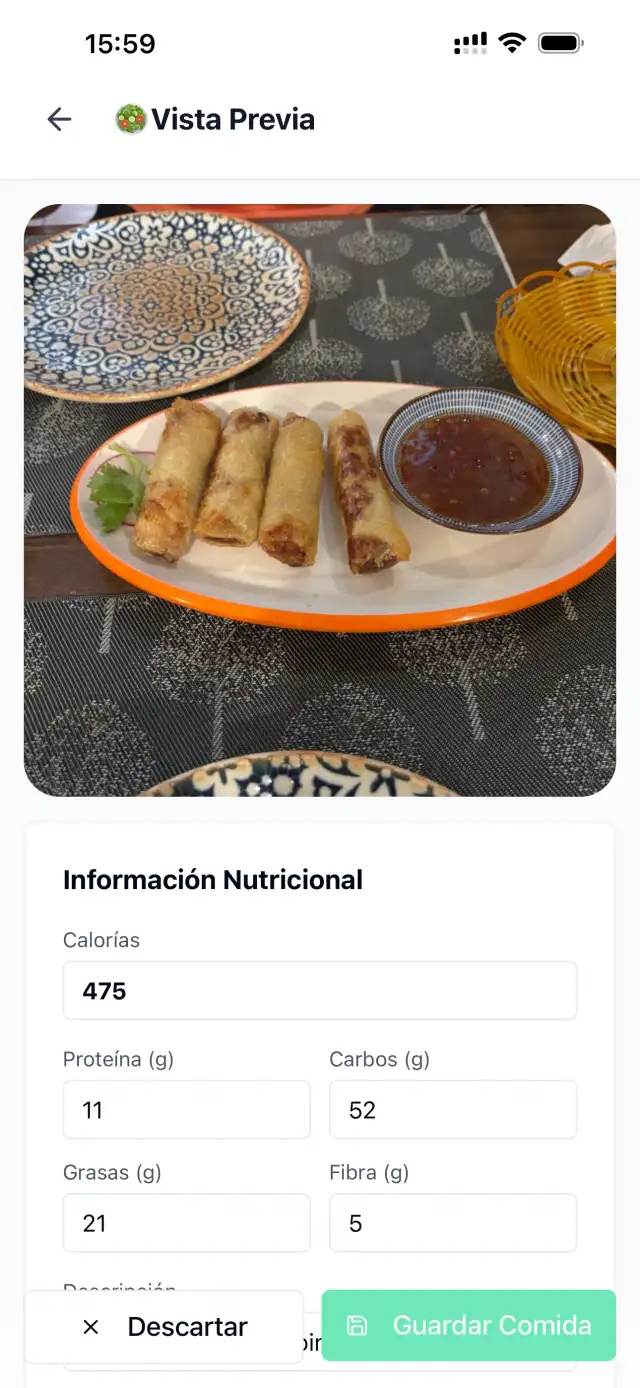
Photo meal logging to check your protein in seconds.
Progress tracking so you see the recomp working even when the scale doesn't move.
Your daily calories and protein at a glance — the two numbers that decide a recomp.
Skinny fat means having a normal body weight but too little muscle and a relatively high body-fat percentage — typically thin arms with a soft belly or love handles.
Should a skinny fat person bulk or cut first?
Usually neither extreme. Most beginners do best with body recomposition: lifting weights while eating at maintenance or a small deficit (about 200-300 kcal) with high protein. Very soft people can lean toward a small deficit; very lean people toward maintenance.
How long does it take to fix skinny fat?
With consistent lifting and enough protein, most beginners see a visible change in about 3 months and a very different physique in 6-12 months, even if the scale barely moves.
Can you fix skinny fat without a gym?
Yes, if you can keep progressing. Push-ups, rows, split squats and dumbbell or band work at home build muscle as long as you keep making them harder over time.
Personal trainer · Software developer · Founder of PonteFuerteAI
Over 10 years of training experience across three continents. Certified personal trainer who coached clients in Spain, India, and Japan before building PonteFuerteAI — the all-in-one AI fitness app he always wished existed.
Side crunches won't burn love handles. A personal trainer explains what actually works — calorie deficit, strength training and protein — and how long it takes.
Hevy wins for social features and a more generous free tier; Strong wins for a minimal private lifting log. Compare pricing, Apple Watch support, routines, and progression.